Corporate finance: what it is
Corporate finance is the discipline that studies how companies obtain, allocate and optimise their financial resources in order to maximise their value. In practice, it involves three main areas: investment management (analysis and selection of profitable projects), capital structure (the optimal mix of debt and equity) and dividend or buyback policy (returning value to shareholders). The ultimate goal is to "maximise the value of the company for its shareholders", balancing risk with expected return.
In operational terms, a corporate finance team coordinates cash flow, selects profitable investments, optimises the combination of funding sources (bank loans, share issues or others) and optimises dividend policy. These tasks ensure that the company has sufficient liquidity and takes investment decisions based on sound financial analysis. In short, corporate finance is the bridge between business strategy and financial decision-making, key to growth and competitiveness.
When we talk about Corporate Finance, we tend to associate it solely with the financial management of the company. But do we really understand its scope? Beyond the simple administration of financial resources, corporate finance in its broadest sense encompasses all the strategic decisions that affect the value of the company. Every business action has a financial repercussion, which makes financial management a fundamental pillar of the sustainability and growth of any organisation.
Having defined everything that falls within this field, it is worth asking what corporate finance really pursues — that is, what its objective is. This question has a clear answer: to maximise the value of the company.
Now, how can we achieve that?
By taking a series of decisions that we could classify into three types, bearing in mind their considerations:
Key areas of corporate finance
Investment decisions.
Investment decisions focus on the acquisition and management of assets that generate a return above the cost of capital. Not all investments are viable, so it is essential to select those that add value to the company.
Investment decisions determine which projects or assets the company's resources are allocated to. Priority is given to those that promise a return above the cost of capital. To evaluate them, the future free cash flows of each project are projected and discounted at a hurdle rate (normally the WACC, or weighted average cost of capital).
Indicators such as Net Present Value (NPV) and Internal Rate of Return (IRR) make it possible to compare opportunities: a positive NPV (above the cost of capital) indicates that a project will create value. Value creation occurs precisely when the return on invested capital sustainably exceeds that cost — the relationship between ROIC and WACC. Ultimately, the rigorous selection of profitable investments drives growth and strengthens the value of the company.
Financing decisions.
Financing decisions focus on how to finance investments and operations (debt vs equity). The objective is to find the optimal capital structure that minimises the financial cost and gives the company flexibility. The capital structure defines the proportion of debt and equity, and an appropriate composition reduces the WACC and maximises total value.
In practice, this means negotiating bank loans (including syndicated loans for large amounts) or seeking equity investors (investment rounds or corporate bond issues). Maraz advises companies throughout that process: from negotiating credit with financial institutions to designing fixed-income issues or raising private debt, always optimising the risk/cost relationship. A well-planned financing structure guarantees liquidity for the business without overburdening it with excessive interest.
Returning value to shareholders.
When a company cannot find projects with a return above the minimum acceptable, it must decide how to return profits to its shareholders.
The two main options are the payment of dividends and share buybacks. Paying dividends distributes profits directly, while a buyback reduces the number of shares outstanding, increasing the relative value of each one. Both decisions affect the financial structure and must be taken with a strategic view. In general terms, the aim is to balance the distribution of profits with the need to reinvest in the business; for example, a stable company might pay regular dividends, while a growing company might prioritise reinvestment and postpone buybacks.
Determining the optimal proportion between distributing and reinvesting is a first-order strategic decision, which we develop in our guide to optimal dividend distribution: in general terms, the aim is to balance the distribution of profits with the need to reinvest in the business, maximising total shareholder return without compromising solvency.
Key services of Maraz Corporate Finance
Maraz Corporate Finance offers comprehensive services to support each of these strategic decisions. Its services include:
- Fractional CFO: A specialised, part-time finance director who guides the company's financial strategy. This service allows companies to access high-level expertise without hiring an in-house CFO, improving profitability and cash flow in long-term planning.
- Business valuation: Objective analysis of the economic value of a company for mergers, acquisitions or fundraising. Maraz uses proven methods (discounted cash flow, sector multiples, adjusted book value, etc.) and develops a solid business plan to underpin the necessary financial projections.
- Financial Due Diligence: Exhaustive review of the economic and asset position in transactions (mergers, acquisitions, refinancings). This analysis reveals hidden risks and verifies key aspects (recurring EBITDA, free cash flow, net debt) to guarantee safe, transparent transactions.
- Financing advisory: Sourcing and structuring optimal financing. Maraz negotiates bank loans (including large syndicated loans) and debt alternatives (private funds, capital markets, bond issues), always with the aim of reducing the financial cost and supporting the business plan.
- Financial restructuring: Viability plans, debt refinancing and reorganisation of the financial structure for companies in crisis. It includes liquidity diagnostics, renegotiation with creditors and redefinition of the capital structure to restore the company's stability and viability.
These services allow clients (companies, investors) to base their decisions on rigorous financial analysis.
Conclusion
Financial decisions within a company cannot be taken in isolation, since each one has a direct impact on the profitability, sustainability and growth of the business. Maximising the value of the company requires a comprehensive approach to the areas of investment, financing and distribution of profits, ensuring that every action helps strengthen the financial and competitive position of the organisation.
A structured approach to Corporate Finance with the financial advisory of Maraz Corporate Finance makes it possible to avoid mistakes that compromise the stability of the company and facilitates strategic decision-making with a long-term view. If you want to strengthen your company's financial position, contact our team.
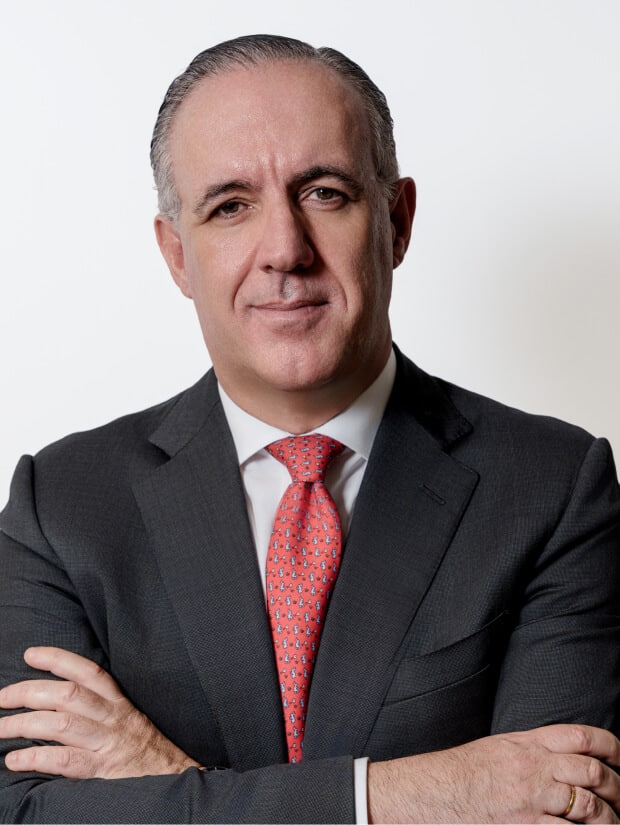
Javier de Rojas Roca de Togores
Partner - Maraz Corporate Finance
Frequently asked questions about corporate finance
What is corporate finance and what is it for?
It is the discipline that studies how companies obtain, allocate and optimise their financial resources to maximise their value. In practice it covers three major decisions: what to invest in (projects with a return above the cost of capital), how to finance the company (optimal mix of debt and equity) and how to reward shareholders (dividends or share buybacks). Its ultimate aim is to maximise the value of the company for its shareholders by balancing return and risk.
How do you decide whether an investment creates value for the company?
By projecting the project's future cash flows and discounting them at a hurdle rate, usually the WACC (weighted average cost of capital). If the Net Present Value (NPV) is positive — that is, the project returns more than the cost of capital — it creates value. Equivalently, a company creates value when its return on invested capital (ROIC) consistently exceeds its WACC.
What is the optimal capital structure?
It is the proportion of debt and equity that minimises the financial cost (WACC) and maximises the value of the company, while also providing flexibility. Debt is cheaper than equity because of the tax shield on interest, but too much of it increases financial risk. There is no universal figure: the optimal structure depends on the sector, the stability of cash flows and the company's capacity to carry debt.
Is it better to pay dividends or reinvest profits?
It depends on whether the company has projects that return more than its cost of capital. If it does (ROIC > WACC), reinvesting usually creates more value than paying out. If it cannot find sufficiently profitable investments, it is more efficient to return that capital to shareholders via dividends or share buybacks. The key is not to destroy value by retaining capital to invest it below its opportunity cost.
What is the difference between dividends and share buybacks?
Both are ways of rewarding shareholders, but they work differently. A dividend distributes profits directly in cash and is taxed when received. A buyback reduces the number of shares outstanding, which increases the relative value of each remaining share and earnings per share. The choice between the two depends on taxation, the signal to be sent to the market and the flexibility desired, since a recurring dividend creates an expectation that is hard to reverse.